
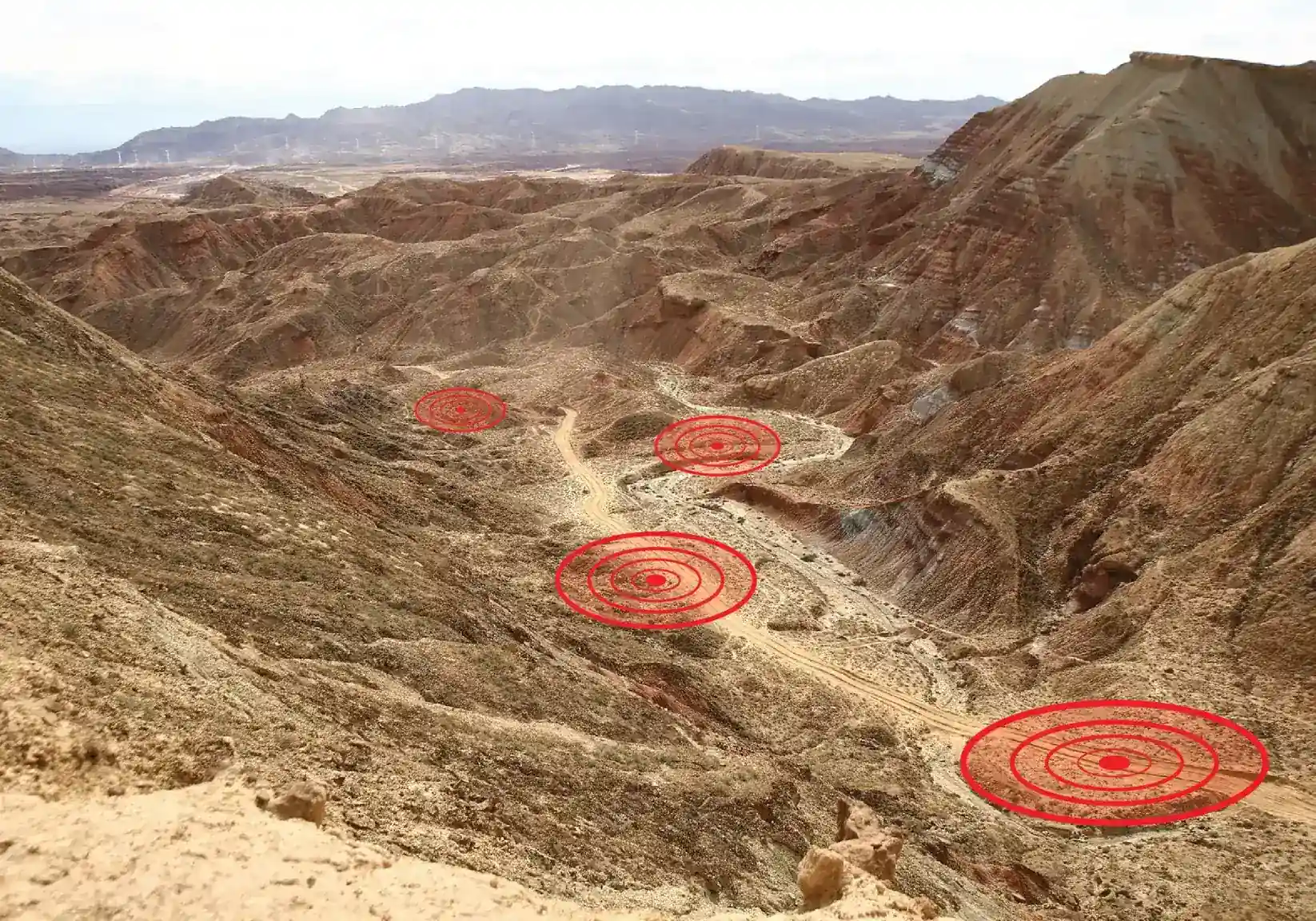
In the realm of modern security strategies, the focus is increasingly shifting towards leveraging advanced technologies for early detection and preemptive countermeasures against potential threats.
Among the forefront of these innovations are the SensoGuard wireless seismic sensors, which have emerged as pivotal tools in enhancing perimeter defense capabilities and early alert systems.
The strategic importance of early alert systems
Early detection is the cornerstone of effective security management. It provides the crucial time needed for security teams to respond to potential threats, particularly along access routes leading to sensitive areas.
Understanding seismic sensor technology
Seismic sensors excel at identifying and categorizing vibrations from footsteps, vehicles, or digging. This capability is vital for perimeter security, allowing for the identification of the nature of a threat and the execution of appropriate countermeasures.
Integration and versatility
The ease with which SensoGuard's seismic sensors can be integrated into existing security frameworks highlights their versatility. They enhance traditional security setups by adding a layer of invisible, yet impenetrable, protection — without requiring an extensive infrastructure overhaul.
Deployed in Minutes, Not Days
MOSS sensors go from case to covert coverage in under 5 minutes, with no trenching or cabling required. A two-person team can be operational on arrival: the kit ships in a single weatherproof case with five sensors, a HUB gateway, and a rugged handset, so a route can be covered before there's time to plan a fixed installation. Each AIO 2 seismic sensor detects footsteps up to 18m and vehicles or digging up to 35m in a full 360° zone, reporting back to the HUB over LoRA wireless at ranges up to 1km, so an operator sees an alert within seconds of a sensor triggering.
Proactive security: a new paradigm
Embracing SensoGuard's wireless seismic sensors signifies a shift towards a more proactive approach to security management, equipping professionals with the ability to detect threats before they materialize.
As security challenges continue to evolve, the role of technologies like these will only grow, underscoring the importance of early detection along every access route into a protected site.
Frequently Asked Questions
How quickly can a wireless seismic early-alert system be deployed?
MOSS sensors deploy in under 5 minutes with no trenching or cabling required — a two-person team can be operational on arrival, which matters most when early warning is needed on a route or perimeter that didn't exist as a planned installation.
What's the detection range of a single MOSS sensor?
The AIO 2 seismic sensor detects footsteps up to 18m (60ft) and vehicles or digging up to 35m (115ft), in a 360-degree zone around the unit, so a single sensor covers a meaningful stretch of an access route rather than just the point where it's placed.
How far can sensors be from the base station?
Every sensor uses LoRA low-power wireless, transmitting up to 250m indoors or up to 1km with the antenna held above ground, reporting to a HUB gateway that relays each detection to the handset in real time.
How long does the battery last in continuous field use?
Battery life varies by sensor type: the AIO 2 seismic sensor lasts up to 1 year, reflecting its low continuous power draw. All sensors use rechargeable batteries and return to the kit's charging station between deployments.